Bow Legs (Genu Varum)
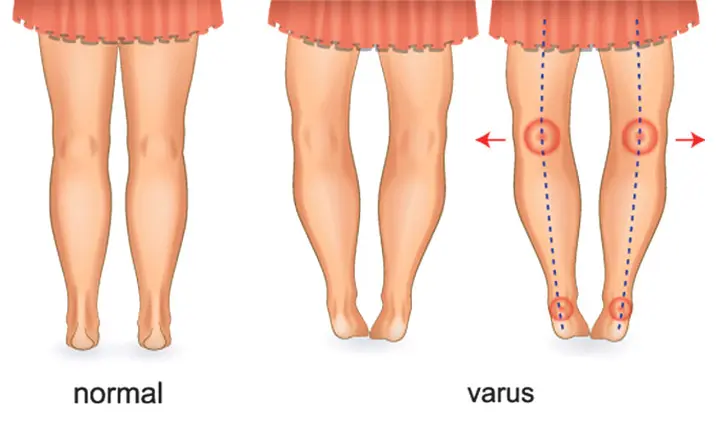
What it is. Abnormal alignment of the lower limbs such as bow legs. Can very worrying for parents and is a common problem that parents bring their children to seek medical help for. These conditions tend to be physiological and correct themselves naturally as the child grows.
Physiological bow legs are very common in the child younger than 2 years of age. While bow legs are mostly physiological, there are conditions in which it may not be normal. Most newborns may display bow legs as they begin to stand at 12 – 24 months, or 2 years old. If your child continues to display persistent bow legs after 2 years of age, it is important to seek medical advice to rule out any other causes of bowing.
Symptoms of bow legs
Some symptoms include:
- An obvious gap between the knees when standing straight with feet together
- Worsening deformity over time if left untreated
- There is usually no pain associated with the condition
Diagnosis, causes & treatment
There are varying causes of bow legs, and it is usually diagnosed through a physical examination. Blood tests and x-ray scans may also be done where necessary. Some causes include.
- Blount’s Disease. Blount’s disease is an abrupt and progressive deformity of the leg, causing bow-leggedness. This disease is covered in greater detail in this article as the next orthopaedic issue.
- Trauma. Trauma to the leg, especially the thigh bone, can cause abnormal bending of the leg and affect leg growth, leading to deformities. Surgery to correct the deformity involves cutting and realigning bones, or pausing the growth of the longer leg to allow the growth of the shorter leg to catch up.
- Skeletal Dysplasia, or Dwarfism. Your child may have and a very short stature compared to children his or her age. Surgery can be one form of treatment for depending on the symptoms and state of the deformity.
- Metabolic Diseases. An example of such diseases is Rickets, a skeletal disorder that is caused by a lack of vitamin D, phosphate or calcium. The disease is associated with short stature and limb deformities such as teeth and skeletal deformities. treatment consists of supplementing the missing vitamin or mineral causing the symptoms. Should this be insufficient, corrective surgery may be needed.
Blount’s Disease
What it is. Blount’s disease is an abrupt and progressive deformity of the leg, causing bow-leggedness. It can affect one or both legs. This occurs when the outer side of the shin bone (tibia) keeps growing, but the inner side of this bone does not. The uneven bone growth causes the shin bone to bend outwards.
Types of Blount’s disease
- Infantile Blount’s disease: It is generally normal for children under 2 years old to have bowed legs. Infantile Blount’s disease may be present if bowing does not improve after age 2 and becomes more severe over time. It affects children เว็บพนันออนไลน์ UFABET สมัครง่าย โปรโมชั่นมากมาย aged 2 – 5 years old, usually occurs in both legs and affects the shin bone only. It is more common than adolescent Blount’s disease.
- Adolescent Blount’s disease. It occurs in children above the age of 10 and affects both thigh bone and shin bone. It tends to occur in one leg only.
Symptoms of Blount’s disease
Some symptoms to look out for include:
- Bowing of the leg below the knee
- Knee pain (more common in adolescents)
- Feet of the affected leg pointing inwards instead of straight ahead